
In this article
- Could exercise help us to live a longer, healthier life?
- How much exercise should we be doing?
- Does exercise type, duration or intensity matter?
- What are the health risks of not exercising?
- What major illnesses can exercise help to protect us against?
- Key points to consider
Could exercise help us to live a longer, healthier life?
Exercising has been reported to have significant benefits for health.1-4 It is proposed to reduce all-cause mortality by approximately 30%.4 Its immediate effects include decreased blood pressure and improved sleep, whilst long-term benefits include weight loss, better bone strength, better balance and coordination, and improved immune function.5 Exercise activates the natural immune system, resulting in increased anti-inflammatory immune responses in the musculoskeletal (muscles, bones, joints) system.5
Figures from the 2024-25 Active Lives Adult Survey report showed that approximately 67% of men and 62% of women in England were active. People of lower social class were less active (54%) than those from higher social class (73%), whilst those living in affluent areas were more active (70%) than those living in deprived regions (57%).6
Also, only 57% of Black people, and 56% of Asian (excluding Chinese) and those from other ethnic groups were active, compared to 69% of people from mixed and non-British White backgrounds, and 66% of White British adults.6
Most importantly, the groups that could potentially gain the most benefit from exercising, such as people living with a disability or long-term health condition (49%), were usually less active than those without (70%).6
Research findings report that adults generally spend on average 7 or more hours a day sedentary (i.e. sitting down, including at work, in the car or during leisure time).1 Adults aged 65 years or over are the most sedentary, spending 10 hours or more sitting or lying down.1
As might be expected, people aged 16-34 years are reported to be the most active (71%), whilst those aged 75 years and older are the least active (44%).6

How much exercise should we be doing?
The UK Chief Medical Officers’ Guidelines4 recommends that each week adults should:
- Do at least 150 minutes moderate intensity activity,1,3 75 minutes’ vigorous activity, or a mixture of both per week
- Do strengthening activities on two days
- Reduce extended periods of sitting
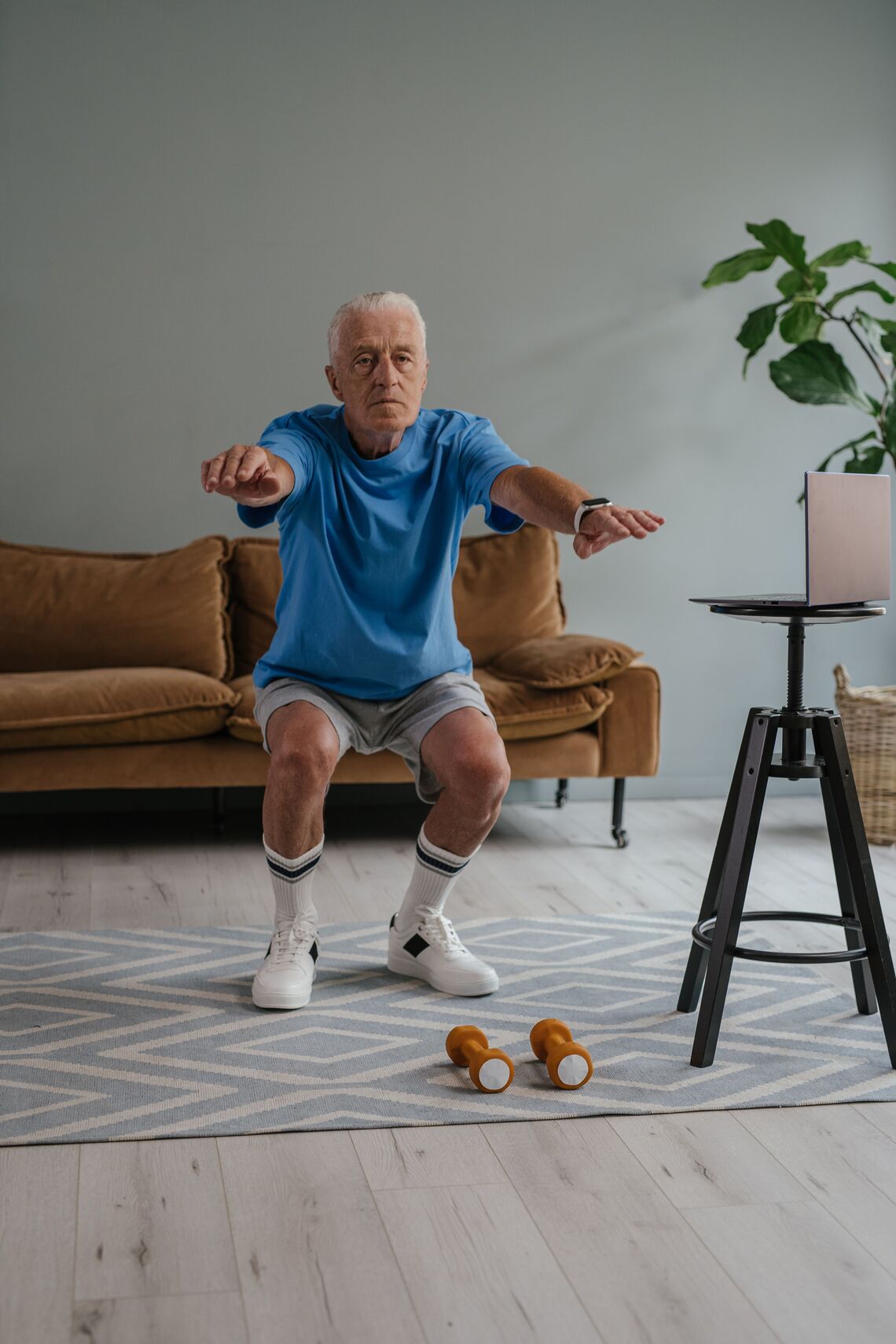
In addition, older adults are advised to perform various types of activities designed to improve balance and strength at least 3 days per week, to help to prevent falls.3
Does exercise type, duration or intensity matter?
Aquatic exercises were shown to be more beneficial than land-based exercises in improving balance in older adults in a 2024 systemic review and meta-analysis of 29 studies.7
In addition, the intensity of an exercise was reported to be especially important in reducing the risk of all-cause and cardiovascular disease mortality, in comparison to the volume and duration of exercise, based on the observational 2011-2014 National Health and Nutrition Examination Survey (NHANES) of nearly seven and a half thousand participants.8
In cancer studies, moderate- to excessive-intensity activity was linked to lower risks of various cancers, particularly breast and bladder cancers. Exercises of all intensities were reported to benefit endometrial cancer.9
However, in contrast to moderate exercise, excessive exercise may lead to a variety of symptoms, including a higher risk of injury, fatigue, extreme weight loss, muscle tenderness and overall weakness. In addition, it can lead to sleep disruption, depression, anxiety, concentration difficulty, and loss of appetite. Excessive exercise may also make people more susceptible to infection and illness due to biochemical and immunological changes.5
What are the health risks of not exercising?
The UK government have estimated approximately 1 in 3 (34%) men and 1 in 2.5 (42%) women live a non-active life, leading to poor health. Sedentary behaviour is linked to 1 in 6 deaths, costing the UK an estimated £7.4 billion annually (comprising £0.9 billion to the NHS).4
What major illnesses can exercise help to protect us against?
Exercising helps us live a longer, healthier life. It reduces the risk of development of several non-communicable, chronic conditions and the risk of all-cause mortality. The following conditions have been shown to benefit from exercise.
Cancers
Exercising is estimated to reduce the risk of breast cancer by 20% and colon cancer by 30%.4 Exercise may also prevent the return and/or progression of some kinds of cancers. A 2025 pooled-analysis of data from almost 1.5 million cancer patients reported those who exercised after cancer diagnosis had a significantly lower cancer-specific mortality, especially for breast cancer, followed by prostate, lung, and colorectal cancer. There was a non-significant reduction for skin cancer.9
Exercise also helps to improve the quality of life of people with cancer by reducing the side effects of chemotherapy, such as pain, nausea, fatigue, and promoting better emotional and psychological health, thus encouraging a positive outlook.10 It also aids in the recovery of cancer by reducing associated risk factors such as being overweight or obese. And it improves bone health and muscle strength.
Cardiovascular diseases
Physical inactivity appears to be associated with the widespread prevalence of cardiovascular disease. Conversely, regular exercise is estimated to decrease the risk of cardiovascular diseases by up to 35%.4
Regular exercise of 30-40 minutes per session, 3-5 times per week has been shown to improve blood pressure and promote a healthy resting heart rate in non-active people.11 There is also some evidence that exercise-induced changes in genes may help prevent risk factors associated with cardiovascular diseases.12
Other positive effects include decreased chronic inflammation, lower cholesterol levels, the release of exercise-derived factors (exerkines) and changes in the blood vessels and heart tissue.13
Chronic kidney disease
Aerobic exercise enhances kidney function primarily by improving muscle growth and strength, and thus heart and lung function, resulting in better blood flow to the kidneys. This is especially important for better outcomes during and after dialysis and/or surgery (kidney transplantation).14
Cognition and neurodegenerative disorders
Findings from a 2025 review of systematic reviews and pooled analyses found exercise, particularly of low- and moderate-intensity, improved general cognition, memory, and executive function (mental skills such as working memory, flexible thinking and self-control) across all age groups. Memory and executive function improvements were greater for children and adolescents than for adults and older adults. Also, people with attention-deficit hyperactivity disorder (ADHD) showed greater improvements in executive function.15
The findings of a more general review of recent studies, also published in 2025, supported these findings and showed that moderate to high intensity resistance exercise enhanced cognitive function in older adults. This review showed that combining resistance and moderate intensity aerobic exercise for older people with dementia was found to be more effective for reducing the decline in cognitive and motor-cognitive function than aerobic exercise alone. However, other studies have shown mixed results. Emerging data suggests that the addition of cognitive tasks to combined resistance and aerobic exercise increases its effectiveness for cognitive health and wellbeing.16,17 Exercising is proposed to reduce the development of dementia by up to 30%.4
Aerobic exercise-induced benefits have been shown to be mediated by decreased shrinking of the brain, and an increase in volume in those areas of the brain involved in memory and executive function.17 In addition, exercise also increases the production of neurotrophic factors. These are proteins that are essential for the growth and healthy functioning of nerve cells. These beneficial effects can reduce the risk of degenerative disorders of the nervous system (neurogenerative diseases) such as Alzheimer’s disease and Parkinson’s disease, as well as inhibit their progression.18
Long-term resistance exercise has also been reported to increase blood flow in the brain and promote the release of neurotrophic factors, whilst reducing inflammation.16,17
In addition, both regular aerobic and resistance exercise have been reported to enhance the ability of the brain to reorganise and create new neural connections (neuroplasticity), improving cognitive performance in older adults and possibly reducing cognitive decline.18
A 2023 review of 100 papers19 reported that aerobic and resistance-based exercise, especially exercise of high-intensity, improves depression. This was associated with a temporary increase in the production of brain-derived neurotrophic factor. In addition, exercise promotes better mood, enhances self-esteem and generally improves the quality of life of people with depression.20
Exercise may also reduce the risk of depression by about 30%.4 A 2024 systematic review and pooled analysis reported exercises such as walking or jogging to be particularly effective for both genders in reducing the risk of depression. Strength training was found to be more effective for women and younger people, and yoga or qigong for men and older adults.21
Type 2 diabetes
Exercise can prevent, delay or reverse type 2 diabetes by helping to lower and maintain healthy weight by reducing adipose tissue (fat) and promoting a healthier lifestyle. This correlates with the lowering of blood glucose (sugar) levels and maintenance of normal blood glucose levels.22 These beneficial effects may reduce the risk of developing type 2 diabetes by about 40%.4
Sleep disorders
Regular exercise has positive effects on sleep, including improvement of sleep quality and a reduction in the symptoms of sleep disorders.
It has been found to promote better quality sleep by decreasing stress levels and enhancing mood. It acts by inducing a feeling of well-being, reducing negative emotions, and supporting melatonin production.23
Key points to consider
- Being active and exercising can potentially help you live a longer, healthy life.
- Experts recommend that adults should exercise at least 150 minutes of moderate intensity exercise weekly, with strengthening activities on 2 days, and reduce sitting for extended periods.
- Older adults should do a variety of activities for balance and strength at least 3 days per week.
- Low-intensity exercise may have a greater effect on how long we live, but high-intensity exercise can result in above-average longevity.
- Exercising increases your chances of enjoying more years of life in good health by reducing the risk of several chronic illness, including cancers, cardiovascular diseases, type 2 diabetes, cognitive and mental conditions, and chronic kidney disease, as well as improving sleep quality.
Reviewed and updated by Mojitola Idowu, July 2026.
Read these Age Watch articles next
- Can we dance our way to health?
- Can exercise help you survive cancer?
- Keeping fit – Why bother?
- Can too much exercise be bad for you?
- Walking and Health
- A quiz on fitness
- Look after your body
References
- Benefits of exercise. NHS. https://www.nhs.uk/live-well/exercise/exercise-health-benefits/
- Health Benefits of Physical Activity for Adults. CDC. https://www.cdc.gov/physical-activity-basics/health-benefits/adults.html
- WHO guidelines on Physical Activity and Sedentary Behaviour. WHO. https://iris.who.int/server/api/core/bitstreams/faa83413-d89e-4be9-bb01-b24671aef7ca/content
- Guidance: Physical activity: applying All Our Health. UK Government. https://www.gov.uk/government/publications/physical-activity-applying-all-our-health/physical-activity-applying-all-our-health
- Docherty S, Harley R, McAuley JJ, et al. The effect of exercise on cytokines: implications for musculoskeletal health: a narrative review. BMC Sports Sci Med Rehabil. 2022 Jan 6;14(1):5. doi: 10.1186/s13102-022-00397-2. PMID: 34991697; PMCID: PMC8740100. https://link.springer.com/article/10.1186/s13102-022-00397-2
- Active Lives Adult Survey November 2024-25 Report. Sport England. https://sportengland-production-files.s3.eu-west-2.amazonaws.com/s3fs-public/2026-04/Active%20Lives%20Adult%20Survey%20November%202024-25%20Report_.pdf?VersionId=eNbVPPXI6E4LS5ozt489Yr_FnGdH84zQ
- Deng Y, Tang Z, Yang Z, et al. Comparing the effects of aquatic-based exercise and land-based exercise on balance in older adults: a systematic review and meta-analysis. Eur Rev Aging Phys Act. 2024 May 19;21(1):13. doi: 10.1186/s11556-024-00349-4. PMID: 38764039; PMCID: PMC11102618. https://link.springer.com/article/10.1186/s11556-024-00349-4
- Schwendinger F, Infanger D, Lichtenstein E, et al. Intensity or volume: the role of physical activity in longevity. Eur J Prev Cardiol. 2025 Jan 6;32(1):10-19. doi: 10.1093/eurjpc/zwae295. PMID: 39276370 https://academic.oup.com/eurjpc/article/32/1/10/7758152?login=false
- Ungvari Z, Fekete M, Varga P, et al. Exercise and survival benefit in cancer patients: evidence from a comprehensive meta-analysis. Geroscience. 2025 Jun;47(3):5235-5255. doi: 10.1007/s11357-025-01647-0. Epub 2025 Apr 12. PMID: 40220151; PMCID: PMC12181474. https://link.springer.com/article/10.1007/s11357-025-01647-0
- Albini A, La Vecchia C, Magnoni F, et al. Physical activity and exercise health benefits: cancer prevention, interception, and survival. Eur J Cancer Prev. 2025 Jan 1;34(1):24-39. doi: 10.1097/CEJ.0000000000000898. Epub 2024 Jun 26. PMID: 38920329. https://journals.lww.com/eurjcancerprev/fulltext/2025/01000/physical_activity_and_exercise_health_benefits_.3.aspx
- Guo L, Wang C. The effect of exercise on cardiovascular disease risk factors in sedentary population: a systematic review and meta-analysis. Front Public Health. 2025 May 15;13:1470947. doi: 10.3389/fpubh.2025.1470947. PMID: 40443938; PMCID: PMC12119565. https://www.frontiersin.org/journals/public-health/articles/10.3389/fpubh.2025.1470947/full
- Yang X, Zhang Y, Wang X, et al. Exercise-mediated epigenetic modifications in cardiovascular diseases. Epigenomics. 2025 Feb;17(3):179-191. doi: 10.1080/17501911.2024.2447811. Epub 2024 Dec 30. PMID: 39929231; PMCID: PMC11812364. https://pmc.ncbi.nlm.nih.gov/articles/PMC11812364/
- Valenzuela PL, Ruilope LM, Santos-Lozano A, et al. Exercise benefits in cardiovascular diseases: from mechanisms to clinical implementation. Eur Heart J. 2023 Jun 1;44(21):1874-1889. doi: 10.1093/eurheartj/ehad170. PMID: 37005351. https://academic.oup.com/eurheartj/article/44/21/1874/7099688?login=false&guestAccessKey=
- Exercise and chronic kidney disease. National Kidney Foundation. https://www.kidney.org/kidney-topics/exercise-and-chronic-kidney-disease
- Singh B, Bennett H, Miatke A, et al. Effectiveness of exercise for improving cognition, memory and executive function: a systematic umbrella review and meta-analysis. Br J Sports Med. 2025 Jun 3;59(12):866-876. doi: 10.1136/bjsports-2024-108589. PMID: 40049759; PMCID: PMC12229068. https://bjsm.bmj.com/content/59/12/866.abstract
- Dhahbi W, Briki W, Heissel A, et al. Physical Activity to Counter Age-Related Cognitive Decline: Benefits of Aerobic, Resistance, and Combined Training-A Narrative Review. Sports Med Open. 2025 May 17;11(1):56. doi: 10.1186/s40798-025-00857-2. PMID: 40381170; PMCID: PMC12085549. https://link.springer.com/article/10.1186/s40798-025-00857-2
- Bonanni R, Cariati I, Tarantino U, et al. Physical Exercise and Health: A Focus on Its Protective Role in Neurodegenerative Diseases. J Funct Morphol Kinesiol. 2022 Apr 29;7(2):38. doi: 10.3390/jfmk7020038. PMID: 35645300; PMCID: PMC9149968. https://pubmed.ncbi.nlm.nih.gov/35645300/
- Ben Ezzdine L, Dhahbi W, Dergaa I, et al. Physical activity and neuroplasticity in neurodegenerative disorders: a comprehensive review of exercise interventions, cognitive training, and AI applications. Front Neurosci. 2025 Feb 28;19:1502417. doi: 10.3389/fnins.2025.1502417. PMID: 40092068; PMCID: PMC11906675. https://www.frontiersin.org/journals/neuroscience/articles/10.3389/fnins.2025.1502417/full
- Jemni M, Zaman R, Carrick FR, et al. Exercise improves depression through positive modulation of brain-derived neurotrophic factor (BDNF). A review based on 100 manuscripts over 20 years. Front Physiol. 2023 Mar 8;14:1102526. doi: 10.3389/fphys.2023.1102526. PMID: 36969600; PMCID: PMC10030936. https://www.frontiersin.org/journals/physiology/articles/10.3389/fphys.2023.1102526/full
- Blumenthal JA, Rozanski A. Exercise as a therapeutic modality for the prevention and treatment of depression. Prog Cardiovasc Dis. 2023 Mar-Apr;77:50-58. doi: 10.1016/j.pcad.2023.02.008. Epub 2023 Feb 26. PMID: 36848966; PMCID: PMC10225323. https://www.sciencedirect.com/science/article/pii/S0033062023000142#s0050
- Noetel M, Sanders T, Gallardo-Gómez D, et al. Effect of exercise for depression: systematic review and network meta-analysis of randomised controlled trials. BMJ. 2024 Feb 14;384:e075847. doi: 10.1136/bmj-2023-075847. Erratum in: BMJ. 2024 May 28;385:q1024. doi: 10.1136/bmj.q1024. PMID: 38355154; PMCID: PMC10870815. https://www.bmj.com/content/384/bmj-2023-075847.long
- Syeda USA, Battillo D, Visaria A, et al. The importance of exercise for glycemic control in type 2 diabetes. Am J Med Open. 2023 Jan 18;9:100031. doi: 10.1016/j.ajmo.2023.100031. PMID: 39035065; PMCID: PMC11256236. https://www.sciencedirect.com/science/article/pii/S2667036423000018
- Korkutata A, Korkutata M, Lazarus M. The impact of exercise on sleep and sleep disorders. NPJ Biol Timing Sleep. 2025 Feb 3;2(1):5. doi: 10.1038/s44323-024-00018-w. PMID: 41775863; PMCID: PMC12912324. https://www.nature.com/articles/s44323-024-00018-w